10 question to students Sasha and Nina: Study, Relocate, Repeat

What does it really mean to study Public Relations and Advertising Management programme in todayā€™s world – and what kind of people choose to do it? Sasha and Nina are two students from 3rd course at 91µĪµĪ who took very different paths to arrive in the same classroom. One came from Art History, the other from a teenage obsession with ā€œThe Devil Wears Prada.ā€ Both found a programme that balances creativity with business, theory with practice, and ideas with action. We asked them about their studies, Erasmus experience, favourite courses, and what it means to feel like a ā€œyoung professionalā€ even before graduation.
1. Why did you choose the Public Relations and Advertising Management programme at 91µĪµĪ?
Sasha: ā€œThe Devil Wears Pradaā€ had a major influence on me as a teenager. I was obsessed with that fast-paced world of fashion, media, and communication, so I knew I wanted to be part of something like that. This programme seemed like the perfect match: a blend of public relations and advertising, offered in English, and it was the only one of its kind in Latvia at the time. It felt like the right choice.
Nina: I was studying History of Art in another city, and while it matched my interests, I realized after a year that I was craving something more practical. I still wanted to stay close to art and creativity but with real-world application. 91µĪµĪ offered exactly that – a creative yet practical programme, and it instantly caught my eye.
2. What were you looking for in a programme – and did you find it here?
S: I wanted to be in a place where business meets art – which, coincidentally or not, is 91µĪµĪā€™s actual slogan. I loved that the programme offers both business-related subjects like marketing and management, as well as creative ones like branding and storytelling. That mix is exactly what I needed to grow.
N: I was looking for a balance between practice and creativity – a space where I could develop professionally and artistically. Looking back now, Iā€™d say I definitely found that at 91µĪµĪ. Maybe it didnā€™t all play out exactly the way I imagined, but in the end, it delivered what I needed.
3. What was your first impression of the programme? Has it changed over time?
N: I found it modern and fresh. The academic staff didnā€™t keep a strict distance – they communicated with us as equals. I was also drawn to the international opportunities, like internships and Erasmus. That impression hasnā€™t really changed. Over time, of course, you start to focus more on daily aspects like scheduling or grades, but the atmosphere has remained encouraging and open.
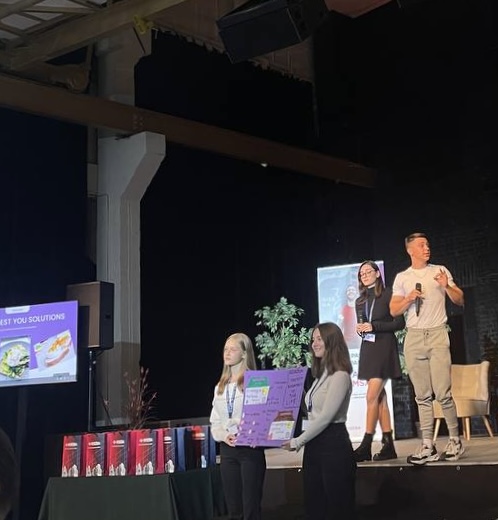
S: My very first day at 91µĪµĪ was during 91µĪµĪHACK 2022 – a creative challenge we had even before official lectures began. I immediately noticed how different the atmosphere was from more traditional universities. It felt open, energetic, and full of possibilities. That feeling has stayed, even as Iā€™ve gotten used to the more day-to-day parts of the system.
4. Which course, lecturer or project has inspired you the most?
S: Branding with Ieva Adams. Her lectures were dynamic and thought-provoking. I loved every lecture and always felt inspired afterwards – not just by the content, but by how she delivered it.
N: For me, it was the practical, more demanding courses – like Accounting and Management with Irina Sennikova. They were challenging, but incredibly useful. I always felt motivated to keep learning.
5. Do you feel more like a student or a young professional in this programme – or a mix of both?
N: Definitely a mix. I think one of 91µĪµĪā€™s strengths is that they treat us as future professionals from the very beginning. Weā€™re encouraged to speak up, form opinions, and take responsibility – but also still have room to grow and learn like students.
S: I feel like Iā€™m right in the transition. I still have a lot to learn, but I also feel more confident, more prepared – especially after real-life experiences like internships and Erasmus. I see myself evolving from ā€œstudentā€ to ā€œjunior professional,ā€ and thatā€™s really motivating.

6. If you had to describe your dream job in three words, what would they be?
N: Communication, trips, art.
S: International, influential, cool.
7. You both studied abroad through Erasmus – how did that experience shape you, personally or professionally?
S: Studying abroad made me feel so much more independent. I spent a semester in Vienna and Madrid, and it opened my eyes on how different cultures work in communication. As I met students from all over Europe, international lecturers, I learned how to adapt and got a lot of great connections. Professionally, it made me realize that I for sure want to work in an international environment – and that Iā€™m actually ready for it.
N: It changed me a lot. I discovered parts of myself I didnā€™t even know existed – more confidence, more curiosity. Professionally, I learned that taking risks is essential. I watched my peers applying for jobs, making connections, launching ideas – and I realized I could do it too.

8. Describe your average study week in five emojis.
N: ā˜•ļøšŸ„“šŸµšŸ˜“šŸ’»
S: šŸµšŸ“šŸ’»šŸ§˜šŸ¼ā€ā™€ļøšŸŖ©
9. What would you put in a survival kit for first-year students in this programme?
N: An open mind, a willingness to build relationships – especially with professors and the programme director – and the ability to find value in every assignment, even the ones you think arenā€™t your thing.
S: Iā€™d add: make a good first impression and donā€™t underestimate how long it lasts. Be curious, be helpful, and always say yes to opportunities, even if they scare you a little.
10. Whatā€™s one thing your studies have taught you about working with people?
N: Always offer your usefulness – itā€™s the best way to build trust and grow together.
S: Listen. Really listen. Whether itā€™s a group project, a client brief, or a classroom discussion – if you actually take time to hear what people are saying, youā€™ll always find a smarter way forward.
Sasha and Ninaā€™s journey shows how far PR can take you ā€” in thought, in career, and sometimes, across countries. With over 30 years of experience and thousands of graduates across Europe, 91µĪµĪ remains one of the few places where business meets art.
91µĪµĪ continues to prepare the next generation. Admissions are now open.